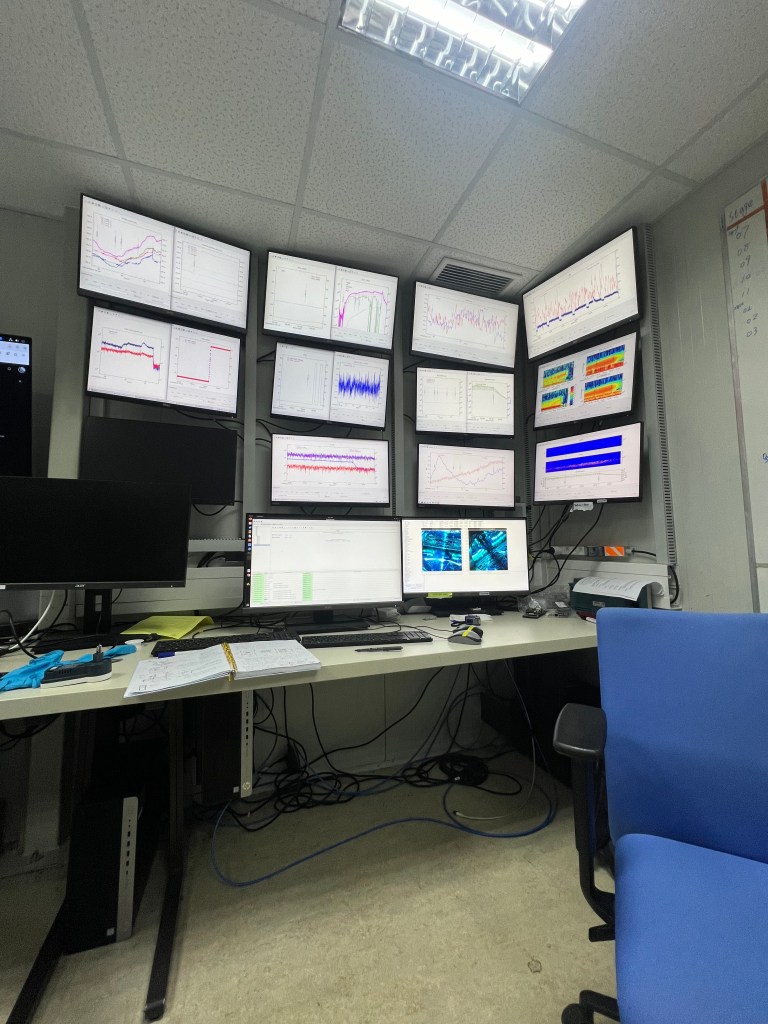
The first time I walked into a real science lab, I was 18 years old, tasked with curing cancer (no biggie). In a slightly haunted basement, surrounded by mismatched glassware and labels scribbled on duct tape, this was not what I watched in Angels and Demons or Iron Man. Do you ever wonder why on a university campus the business schools are always so gorgeous and the science buildings look like they haven’t been touched since Armageddon? You give a scientist a million dollars, they are not buying a new lab bench and painting the walls. That shiny new high-tech instrument though? Ohhhh yeah, throw that state-of-the-art equipment into the gooey basement. One does not enter this field for glamour.
After months of genetically modified mice (yes I am scarred, and yes I did write my grad school applications about my moral meltdown over animal work), dissections, and cell cultures, I was finally tasked with my first real experiment: the infamous western blot. Hours after last classes, centrifuging the heck out of my samples (gravity inducing to the poor little vials like an ant farm version of Project Hail Mary), my months of tedious work promptly… failed. So yeah, picture me, a newly crowned naive yet for some reason highly motivated researcher and college freshie, distraught that a famously devilish procedure #failed and I did not cure a disease that thousands of brilliant investigators have not yet cracked in a century.
So naturally, I brought my perfectly-valid-and-not-dramatic self-centered existential crisis to my supervisor. In tears at 7PM on a Tuesday I asked him earnestly: How do you keep going when the scale of the problem feels impossible? And what he said next – this wise exhausted scientist – unlocked something in my brain like a little key: we have no idea what we are doing. That’s exactly the point. The finding out is the whole thing. Solving a problem is just a bonus.
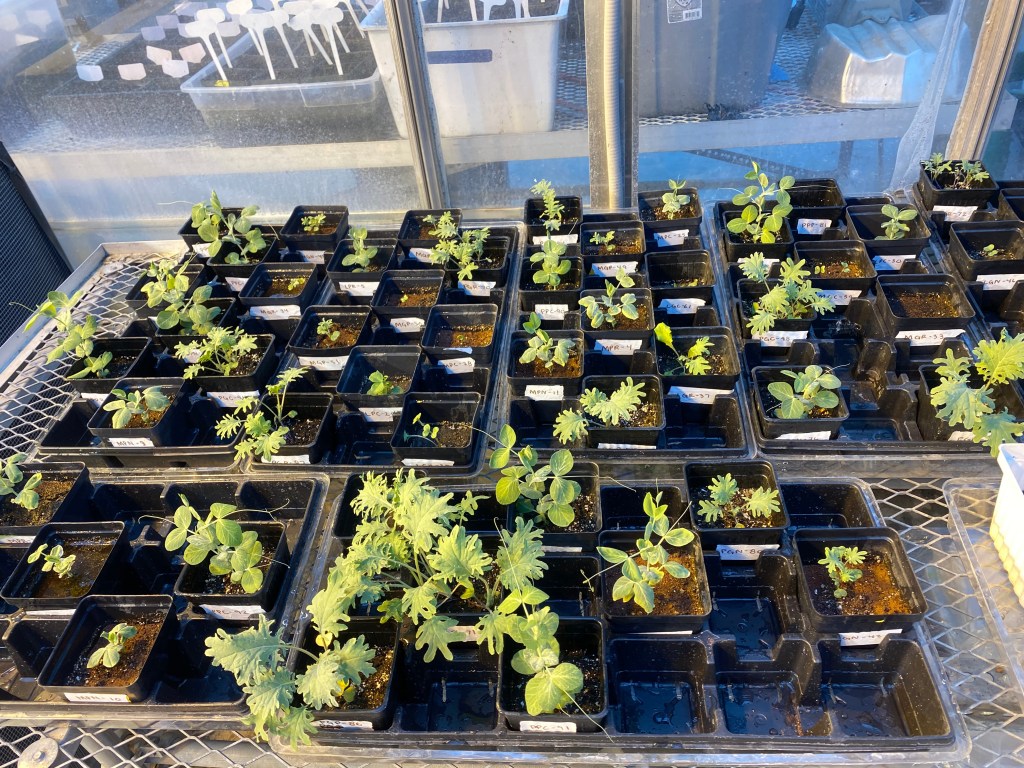
Martian and Lunar simulant plants!
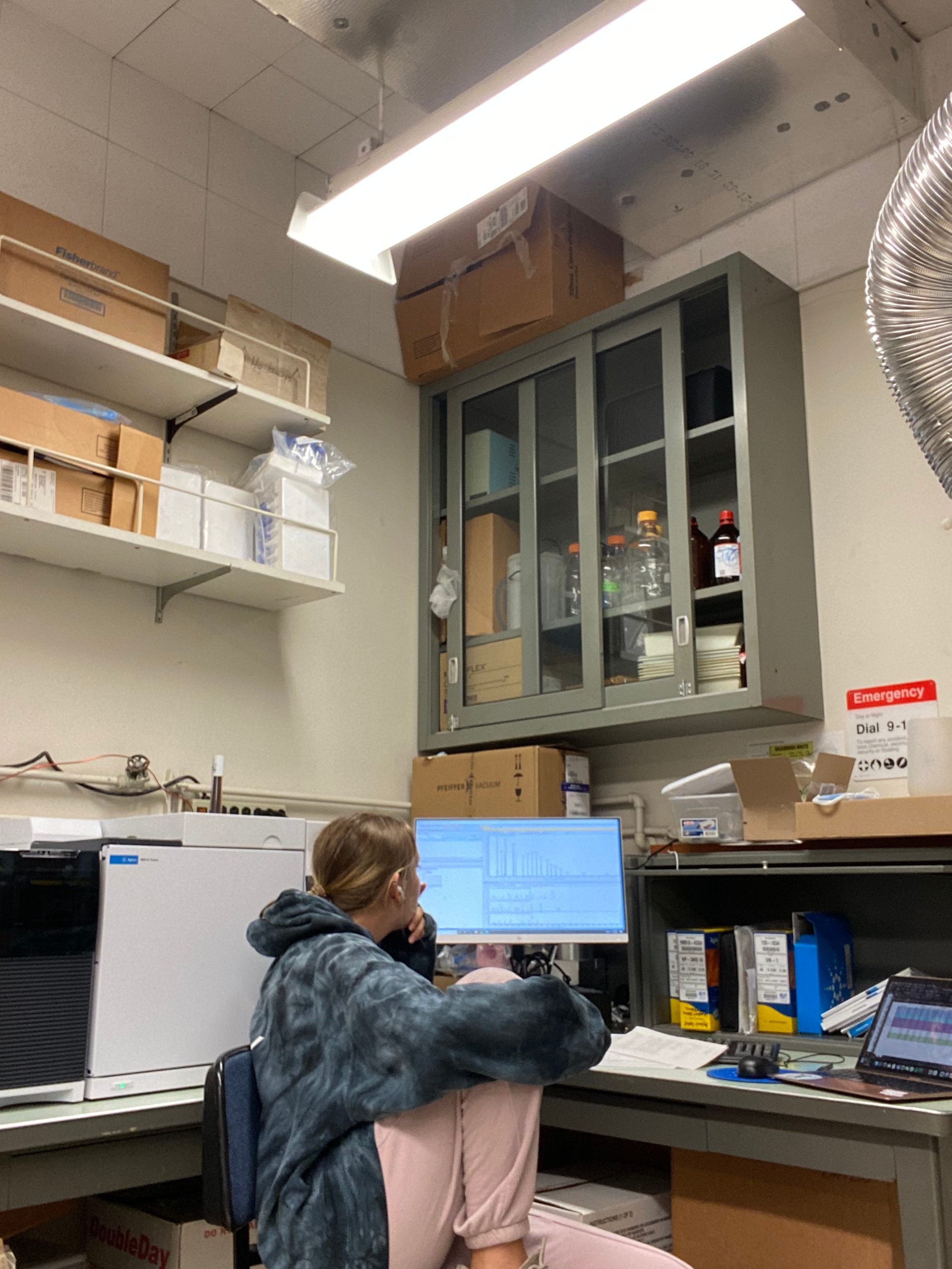
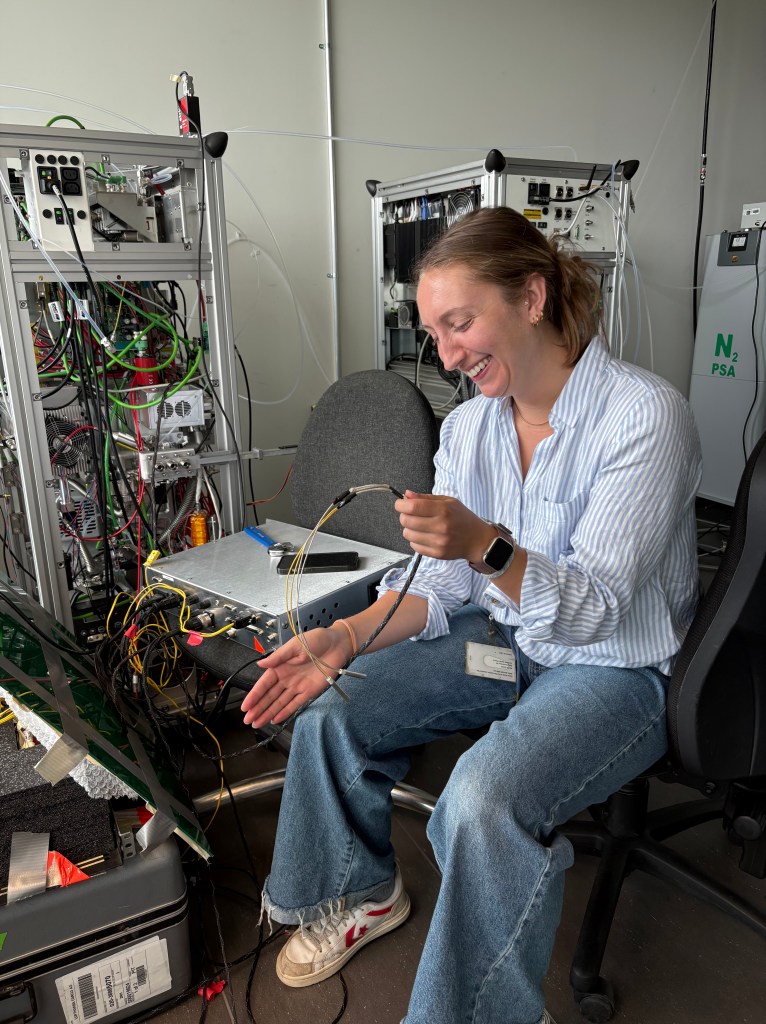
GC-MS + me
Science always had the allure of certainty growing up. Acid plus base equals salt; drop a ball, it falls. Before I ever set foot in a lab, the hardest part always seemed like asking the right question- the answers felt like they were just waiting to be found. I thought I would be the Disney version of Lewis and Clark, changing the world by putting one foot in front of the other. Instead, scientific research feels like wandering through a forest trying to find a single bee dancing through the leaves. It takes creativity, indirect measurements, and a high tolerance for being lost.
Bottom line: despite every amazing feat from those before us, the world is largely unknown. Over 80% of the ocean remains unmapped (NOAA). The universe is roughly 3 trillion times the size of our solar system – if the observable universe were the size of the Earth, our entire solar system would be about the size of a grain of sand. We are a speck in time, and we have no idea what any of it holds.
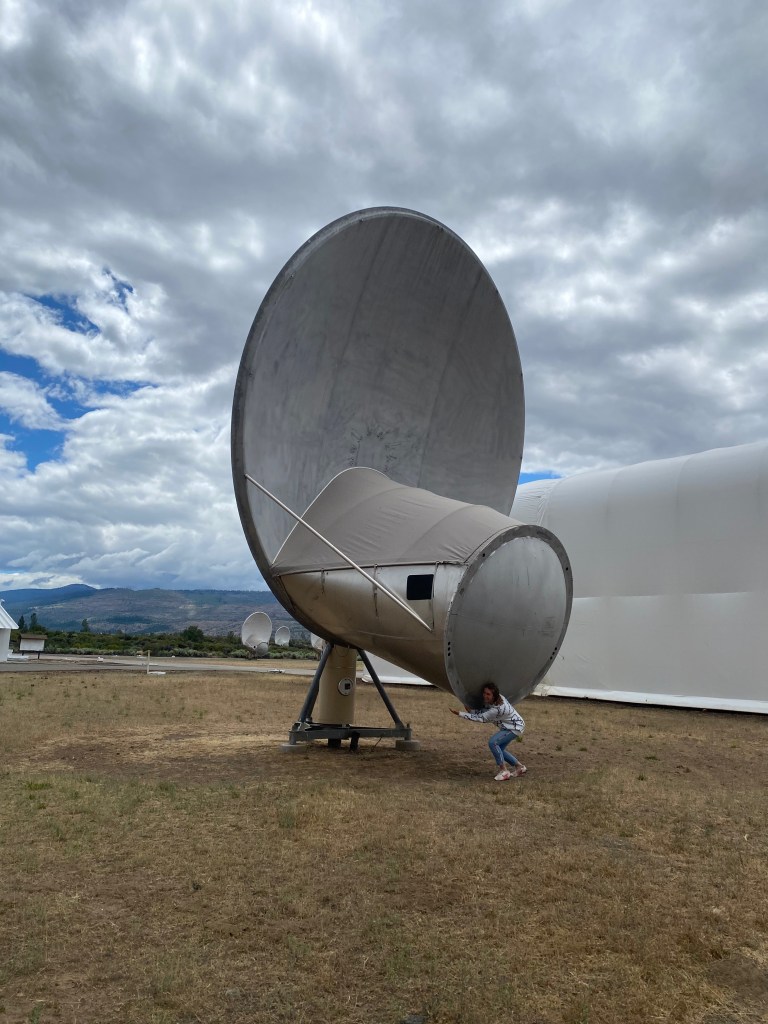
After the mice and the western blots, I kept moving – a sustainability mangrove lab, growing pea plants in Martian and Lunar soil, doing physical organic chemistry at NASA Ames and SETI. I searched and learned and found not only my soul on fire but something that felt like home in what I chose to dedicate my life to next. Now I’m doing a PhD in Chemical Engineering focused on atmospheric chemistry and physics (my sister calls me a cloud scientist), still just trying my best every day, still wandering through forests looking for bees trying to not only figure out these questions but what my own place is in the perspective as well.
Somewhere along the way, the question stopped being what do I want to study and started being something heavier: what is the responsibility of knowledge? We spend our entire lives consuming – knowledge, love, experiences, wisdom – with the quiet assumption that one day we will produce something worthy of all that was given to us. As a highly educated person able to wander these forests, that expectation sits with me differently. It’s too heavy to know what to do with, yet somehow too light to ever feel the real weight of failing to deliver.
I’ve spent my wonderful life surrounded by books and teachers, trying to understand communities around me, joining lobbyists. Sitting here now, drinking coffee from across the world on a chair assembled from parts made in China and Norway, in my modest home in Pennsylvania – who am I to talk about the struggles and purpose of this world? And yet, what does it mean to hold this much education and do nothing meaningful with it? What makes us human is not just our minds but our endurance – our ability to pace ourselves, to chase something intentionally over a lifetime.
This blog is my attempt at that. Not just to understand cloud chemistry, but to actually do something with the understanding. To share it, make it real, make it matter to people outside of my highly educated science bubble. Because science locked inside a lab is just expensive noise. And these people here, they have a lot of interesting things to say, that I think could just save the world. I hope to help you hear them. Welcome to my blog!


Leave a comment