SUMMARY:
- What happened? On March 8, 2026, after U.S.-Israeli airstrikes struck oil depots near Tehran, a dark, oily rain fell across Iran’s capital and surrounding regions.
- What is black rain? Black rain is ordinary precipitation that has picked up massive concentrations of soot, toxic hydrocarbons, and pollutants on its way down.
- The science of why it’s black and why normal rain is white comes down to particle size, light scattering, and what happens when soot absorbs rather than reflects.
- This has happened before: Hiroshima 1945, Kuwait 1991. Each time, we were reminded that the sky carries everything we put into it and eventually gives it back.
- What are the health consequences? Respiratory damage, chemical burns, long-term contamination of soil and water.
There are moments when the sky stops being beautiful and starts being a document. A record of what we’ve done.
On the morning of March 8, 2026, people in Tehran looked up at black rain (Time, Nature). An overnight assault on the city’s fuel depots, mostly oil refineries, sent plumes of dense smoke into the atmosphere. And when the rain came, as it does especially quickly with the increased particle count from explosions, it brought everything back down with it. Residents described a thick film covering their cars, their rooftops, their skin. Eyes burning. A woman in her twenties told BBC Persian: “I can’t see the sun. There is a horrible smoke. It’s still there. I’m very tired.”
The side effects of these toxic explosions are long undocumented and long term killers. Somewhere in the middle of a war that was generating headlines for a hundred other reasons, the atmosphere was quietly also doing damage by doing what it has always done: absorbing what we give it, and returning it.
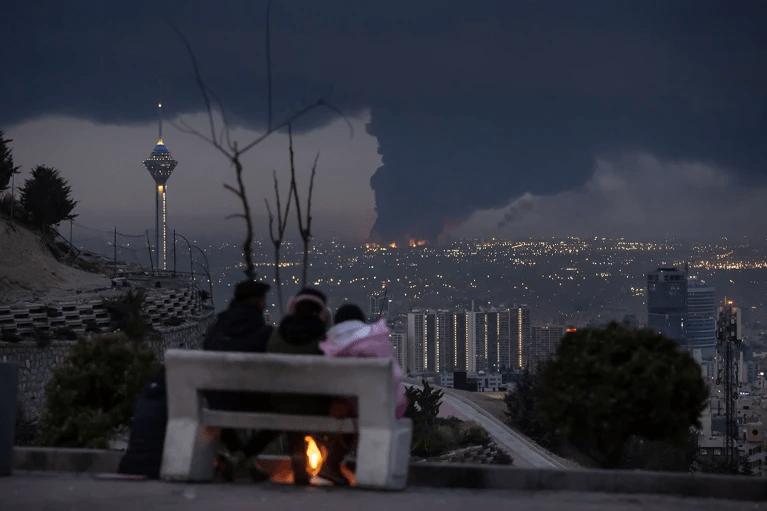
March 8, 2026 in Tehran: Hassan Ghaedi/Anadolu via Getty
Why is rain white, and why is this rain black?
To understand black rain, you first have to understand why regular rain looks the way it does.
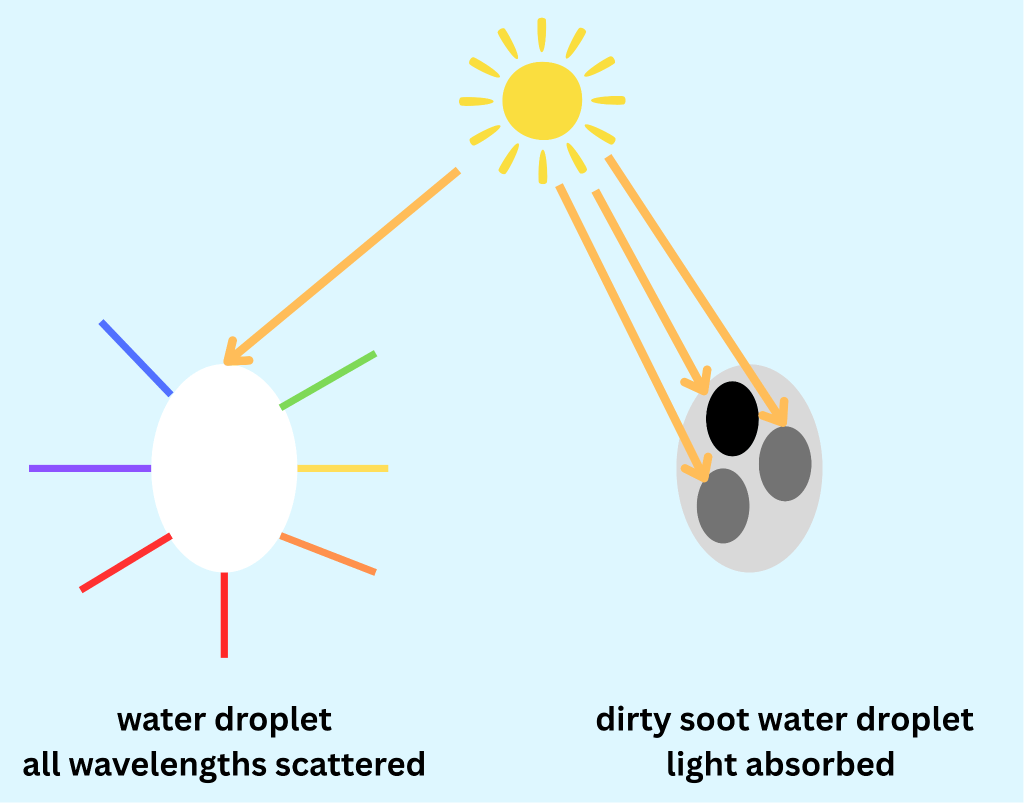
Water droplets in clouds are enormous compared to wavelengths of visible light. A typical droplet is somewhere between 10 and 100 micrometers across; a wavelength of visible light is between 0.4 and 0.7 micrometers. At that size difference, something called Mie scattering takes over; the droplets scatter all wavelengths of light roughly equally, in all directions. Every color arrives at your eye at the same time. The result is white.
More droplets means more scattering, which means less light makes it through to the base of the cloud. That’s why the underside of a tall storm cloud looks dark: not because the composition changed, but because less light is surviving the journey down. Clouds are white because liquid water droplets happen to be the perfect size to scatter sunlight without preference.
So what changes when a city’s oil depots are on fire?
The droplets pick up soot, specifically black carbon (getting this name from, yes, their color), as they fall through an atmosphere thick with the products of incomplete combustion. Soot doesn’t scatter light the way water does. It absorbs it. Black carbon is one of the most light-absorbing substances in the atmosphere; it is, almost literally, the color black in particle form. When rain falls through air that is thick with it, the droplets become carriers. They arrive dark, heavy, and carrying everything the fire released.
When fossil fuels burn incompletely, as they do in a catastrophic uncontrolled fire, rather than a controlled combustion engine, the products are particularly nasty. Nitrogen oxides. Sulfur dioxide. Polyaromatic hydrocarbons, some of which are carcinogenic. Heavy metals. Soot. All major source toxic scary pollutants that should be locked in Alcatraz no key HAP.
This has happened before
Black rain has a history, and it is not a cheerful one.
The most infamous instance was Hiroshima and Nagasaki in 1945. Survivors described intense dark rain beginning within 30 to 60 minutes of the explosions, dark, oily, almost tar-like in consistency, falling in wide bands across areas that had survived the initial blast. The mushroom clouds had carried ash, carbon, and radioactive debris miles into the atmosphere. When it rained out, it came back radioactive and toxic. People who had taken shelter from the explosion, who had survived the blast itself, were then caught in the black rain. Severe radiation burns. Long-term exposure effects. The sky, giving back what the bomb had put in.
In 1991, when Saddam Hussein’s forces set hundreds of Kuwaiti oil wells alight, the resulting smoke plumes were visible from space. Black rain fell across a wide region. The crucial difference was that the Kuwaiti oil fires burned over largely unoccupied land. Tehran has nearly ten million people.
There is a 1902 account of black rain in North Carolina, documented in a scientific journal, from coal combustion. Before modern pollution controls, cities like 19th-century London and Pittsburgh (shoutout) occasionally saw visibly dirty rain from coal burning. It was not called black rain then, it was called Tuesday.
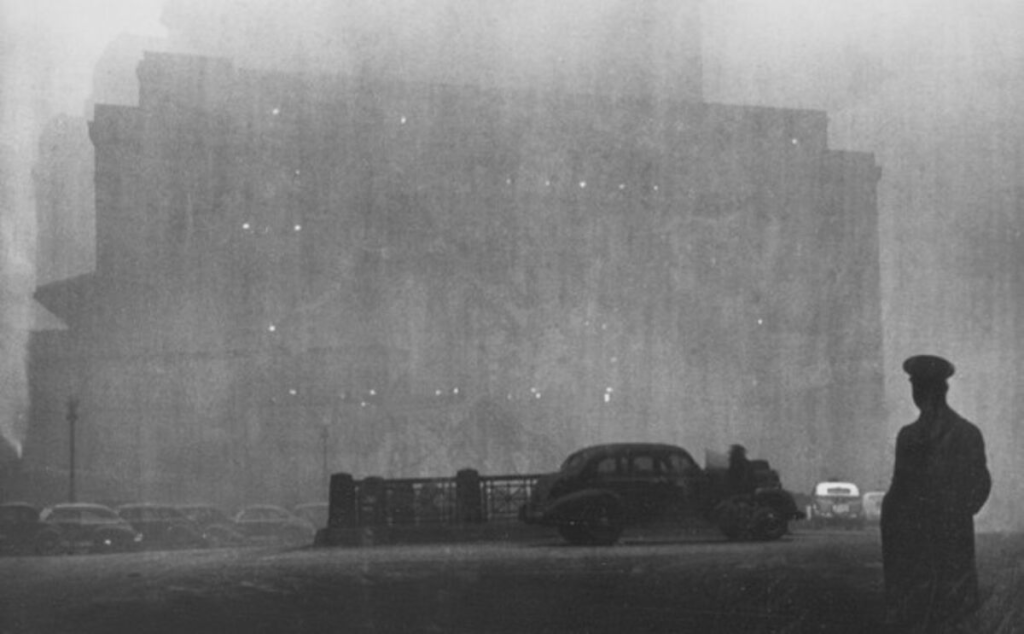
long term effects of black rain
The WHO’s warning was direct: respiratory problems, eye irritation, the recommendation to stay indoors. These are the acute effects. The longer arc is more troubling.
Toxic hydrocarbons and heavy metals contaminate soil. They leach into groundwater. The same particulates that fall on skin and sting eyes settle into agricultural land and water systems. Forever chemicals, likely present in flame retardants built into the destroyed facilities, can become airborne and cycle back through the rain. Tehran already has some of the worst air quality of any major global city; its regulatory infrastructure for this kind of environmental emergency is not built for a scenario like this. In terms of proximity to a major population center, this is close to a worst-case scenario.
Some legal scholars and Iranian officials have gone further, describing the strikes on fuel storage facilities as a form of chemical warfare: the deliberate targeting of infrastructure that the attackers almost certainly knew would release toxic compounds over a civilian population. Whether or not that legal framing holds, the physics is not in dispute. The fires were real. The atmospheric chemistry was real. The rain was real.
I can tell you why the droplets turned dark: particle size, absorption coefficient, incomplete combustion byproducts, Mie scattering. What I cannot tell you, what no equation accounts for, is what it is like to look up at the sky you have always lived under and watch it rain something that has never been rain before. What it is like to stay inside because the sky has become unsafe. The purpose of this post is not to comment on politics or the fight in this war. The atmosphere and this Earth are shared, what we do to it, it shall do to us.
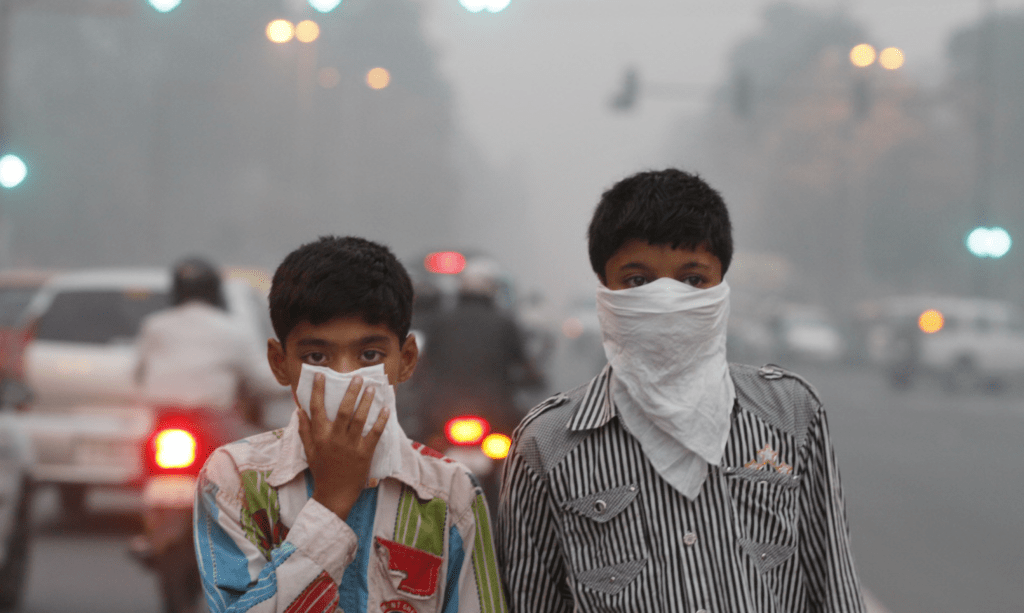
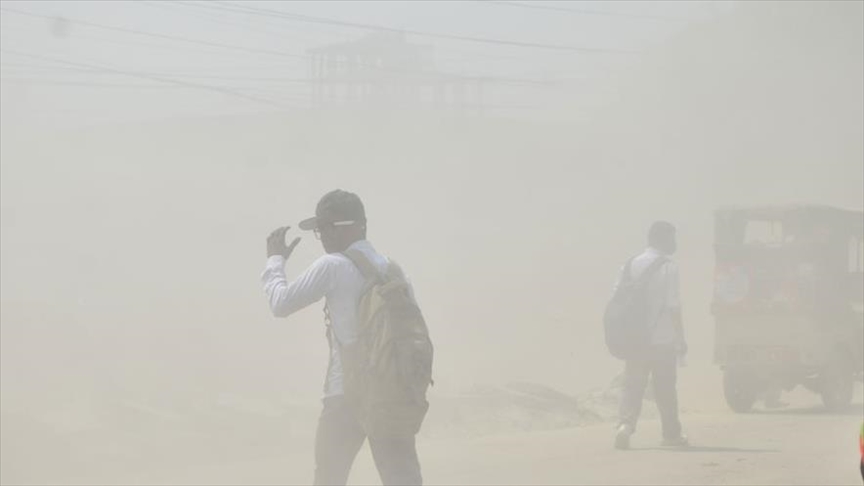
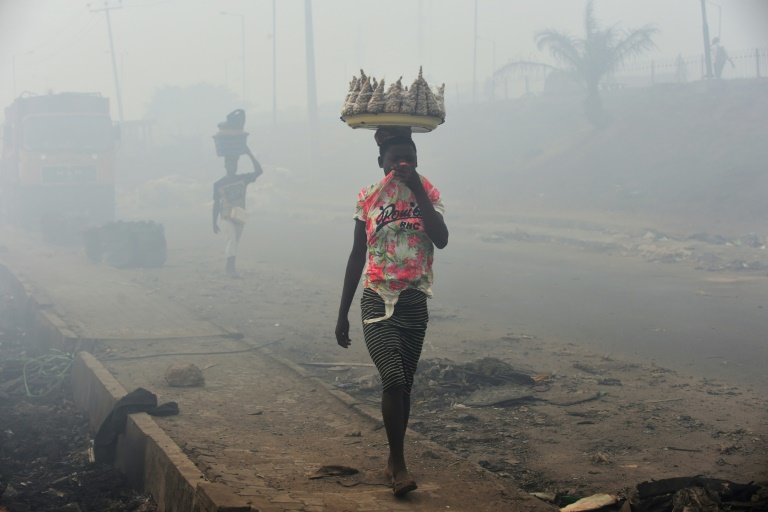
Photos from New Delhi, Bangladesh, Nigeria



Leave a comment